Cushlora Ergonomics for Sustained Office Comfort
 Sam VasquezBuying Guide Lead
July 23, 2026. This analysis explores the mechanics of orthopedic seat cushions and how they mitigate the physical toll of sedentary office work. It is designed for corporate professionals and remote workers seeking to upgrade their existing seating without replacing entire furniture sets.
The Mechanical Strain of Modern Desk Work
Sitting for eight to ten hours a day is an unnatural state for the human spine. When we sit, the pelvis often rotates backward, flattening the natural curve of the lower back and placing excessive pressure on the intervertebral discs. According to Vive Health, orthopedic lumbar cushions are essential to improve posture and spine alignment because they can fit on almost any chair or bench to provide tailbone and back support. Without this intervention, the weight of the upper body concentrates on the coccyx and ischial tuberosities—the sit bones—leading to chronic inflammation and numbness.
I have seen many people try to solve this with soft, plush pillows, but those often make the problem worse by providing zero structural resistance. You need a material that maintains its shape under load. When evaluating an orthopedic seat cushion for office chair use, the primary goal is pressure redistribution. If you are sitting on a standard foam pad that bottoms out within twenty minutes, you are essentially sitting on the hard plastic or wood of the chair frame. This lack of support is why many workers experience that mid-afternoon slump characterized by fidgeting and lower back tightness. An orthopedic seat cushion for office chair must provide enough lift to keep the hips slightly above the knees, which naturally encourages the spine into a neutral position. Between a standard decorative pillow and a dedicated medical-grade cushion, the difference in pelvic tilt is measurable and significant for long-term musculoskeletal health.
How Cushlora Integrates into Ergonomic Environments

Photo by Max Vakhtbovych on Pexels
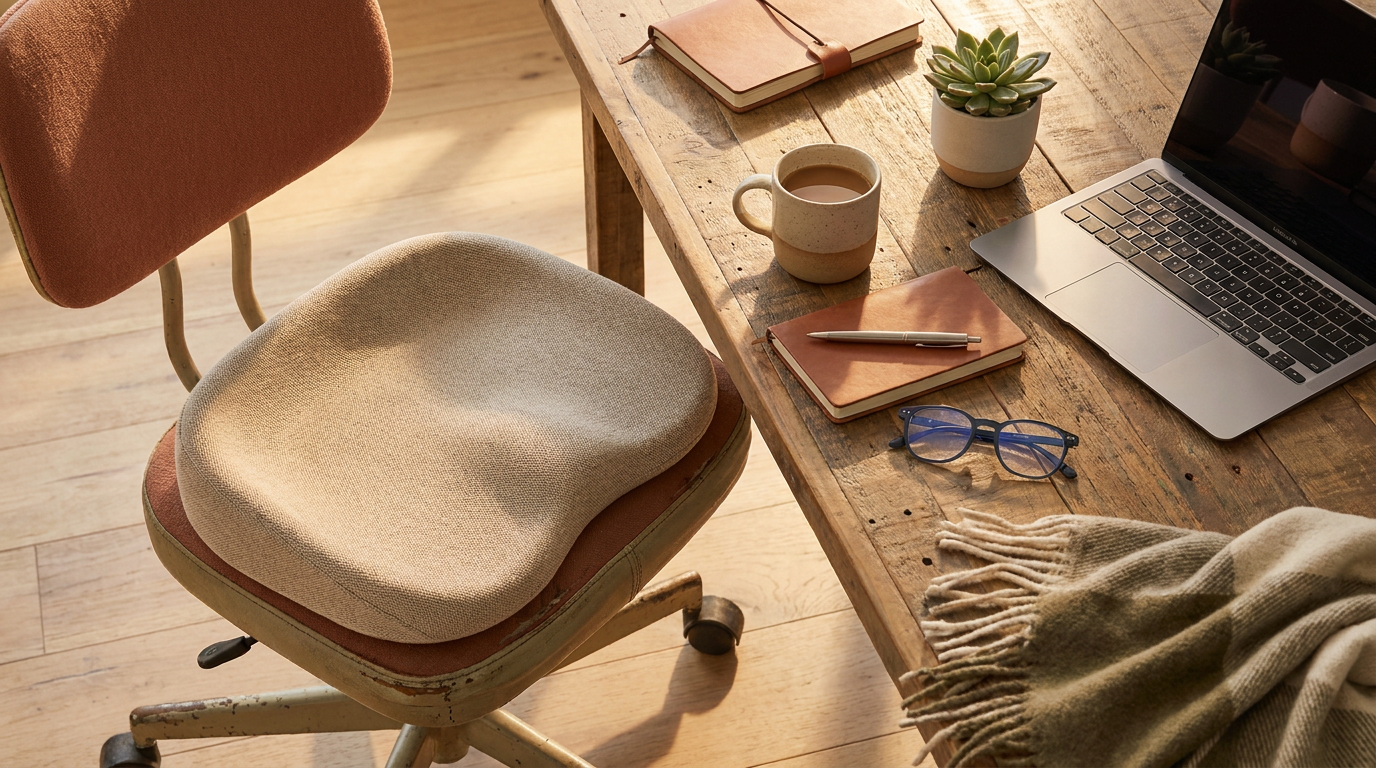
Cushlora focuses on high-density memory foam that responds to body heat and weight to create a contoured map of the user's posterior. This isn't about just being 'soft'; it is about increasing the surface area of contact. By spreading your weight across a larger area, the pressure per square inch on your tailbone drops. This is a similar philosophy to the Pressure Relief Ergonomic Seat Cushion from The Cushion Lab, which utilizes specific contours to support the thighs and lower back.
When you use a Cushlora insert, the U-shaped cut-out is the most critical feature. It allows the tailbone to 'float' rather than being compressed against the seat. This is particularly useful if you already have an orthopedic seat cushion for office chair that lacks a coccyx relief zone. In my experience, the density of the foam is where most brands fail. If you're on a budget, you might be tempted by the cheap foam inserts found at big-box retailers, but those usually lose their resilience in weeks. Cushlora is built to withstand repeated daily compression without losing the height necessary for proper hip alignment. Furthermore, the breathable mesh covers used by Cushlora help mitigate the heat buildup that often plagues memory foam products. If you are looking for an orthopedic seat cushion for office chair that stays cool during a deadline push, the airflow through the outer fabric is just as important as the foam inside. Using this in conjunction with another orthopedic seat cushion for office chair setup for lumbar support creates a comprehensive ergonomic envelope that protects the spine from the base up.
Choosing the Right Support for Your Setup
Photo by Engin Akyurt on Pexels
Selecting the right cushion requires an honest assessment of your current chair and your specific pain points. If you have a high-end ergonomic chair that already has a waterfall edge and lumbar dial, you might only need a thin coccyx pad. However, most of us are working from home on dining chairs or basic task chairs that offer the support of a flat board. In those cases, a full-profile orthopedic cushion is mandatory.
Here’s what I’d actually buy: if your main issue is lower back pain, I would pair the Cushlora seat base with a dedicated lumbar roll. If your issue is leg numbness or tailbone soreness, the seat cushion alone should be your priority. Skip this if you already own a premium Herman Miller or Steelcase chair that is properly fitted to your dimensions, as adding a thick cushion can actually throw off the built-in ergonomics of those high-end frames. Between the Cushlora and a generic gel pad, I'd go with the Cushlora because gel tends to bottom out and lacks the structural memory required for all-day support.
Use this checklist before finalizing your purchase:
- Measure your chair width to ensure the cushion won't overlap the armrests.
- Verify the cushion has a non-slip bottom to prevent sliding during transitions.
- Check for a removable, machine-washable cover for hygiene.
- Ensure the foam density is rated for your body weight to prevent bottoming out.
- Look for a U-shaped or notched design if you have specific tailbone sensitivity.
- Confirm the return policy in case the height of the cushion alters your desk-to-eye alignment too drastically.