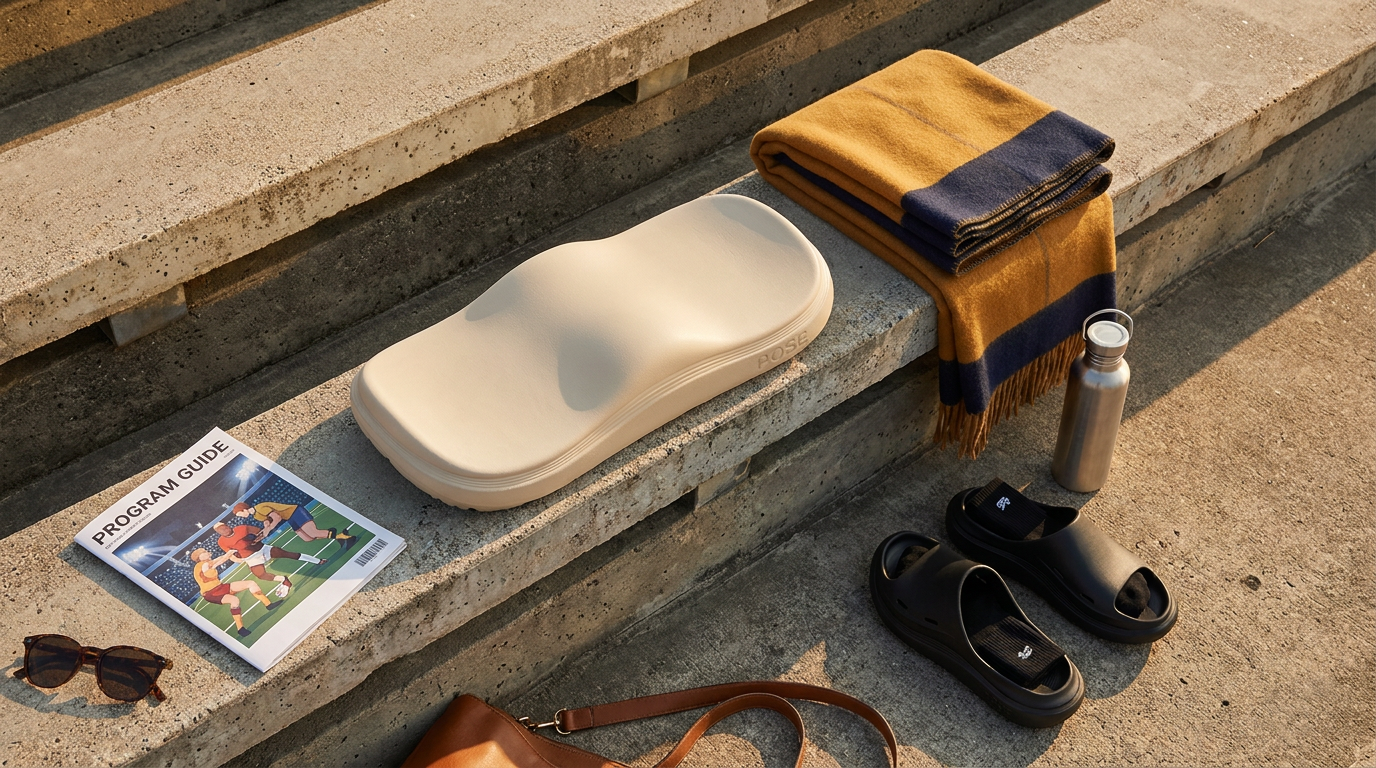
Cushlora Ergonomics for Concrete Stadium Seating
 Maya ChenContributing Editor
July 23, 2026. This analysis evaluates the mechanical necessity of dedicated lumbar support in high-density seating environments. It is written for sports spectators and event attendees seeking to mitigate the physiological impact of prolonged sitting on rigid surfaces.
The Mechanical Failure of Standard Bleachers
The conventional wisdom says that any layer of foam between a spectator and a metal bleacher is sufficient for comfort. This assumption ignores the fundamental physics of spinal compression. Standard stadium seating, often constructed from extruded aluminum or poured concrete, provides zero shock absorption and forces the pelvis into a posterior tilt. According to Stadium Seats and Cushions, consumers often gravitate toward folding chairs that cost nearly $90, yet these bulky items frequently fail to address the core issue: the lack of contouring for the human sacrum. When you sit on a flat, hard surface for three hours, the pressure on your ischial tuberosities—the "sit bones"—leads to restricted blood flow and nerve compression. Here's the part nobody talks about: a thin, cheap cushion actually increases instability by creating a wobbling base without providing enough density to prevent bottoming out. A portable seat cushion for stadium seats must do more than just exist as a barrier; it must redistribute weight across the entire gluteal surface area to prevent the localized pressure spikes that characterize the bleacher experience. The industry consensus that portability must come at the expense of thickness is a false dichotomy that results in thousands of spectators leaving games with preventable lower back strain.
Engineering Support with Cushlora
Photo by Digital Buggu on Pexels
Cushlora approaches the problem of portable seating through a lens of material density rather than just soft aesthetics. While products like the Super Cushion Stadium Cushion rely on a 2-inch thickness and a 13-inch square footprint to provide basic relief, Cushlora focuses on the structural integrity of the foam itself. In a portable seat cushion for stadium seats, the density of the internal cells determines whether the material will collapse under the average human weight or maintain its loft. Run the math: a 180-pound adult sitting on a standard 13-inch cushion exerts significant pounds per square inch. If the material is low-density open-cell foam, it compresses to less than half an inch within twenty minutes, effectively returning the user to the hard surface of the bleacher. Cushlora utilizes high-resiliency polymers that maintain their shape even under sustained load, ensuring that the portable seat cushion for stadium seats provides a consistent elevation. This elevation is critical for maintaining an open hip angle, which reduces the strain on the psoas muscle and the lumbar spine. Furthermore, the integration of a non-slip base is not a luxury but a safety requirement; on slanted concrete tiers, a sliding cushion forces the core muscles into constant micro-contractions to maintain balance, leading to fatigue. By stabilizing the pelvis, a portable seat cushion for stadium seats allows for passive sitting, where the chair does the work of supporting the body rather than the body working to stay on the chair. This is the distinction between a mere accessory and a functional piece of ergonomic equipment.
The Spectator Decision Framework
Photo by Max Vakhtbovych on Pexels
Selecting a seating solution requires a move away from impulse buying based on color or price and toward a technical assessment of one's own physiological needs. Most consumers overestimate their tolerance for discomfort and underestimate the cumulative effect of vibration and hard-surface sitting. When evaluating a portable seat cushion for stadium seats, ignore the marketing claims of "cloud-like comfort" and look for these specific mechanical indicators:
- Compression Deflection: Ensure the foam density is rated to support your specific weight without flattening to the base material.
- Thermal Regulation: Look for breathable covers that prevent heat buildup, which can soften the foam and reduce its supportive properties.
- Base Traction: A rubberized or textured bottom is mandatory to prevent the cushion from migrating on polished metal or painted concrete.
- Anatomical Contouring: The surface should have a slight recess for the tailbone to prevent direct coccyx pressure.
- Transport Efficiency: The weight-to-support ratio must justify the effort of carrying the item through security checkpoints and crowded concourses.