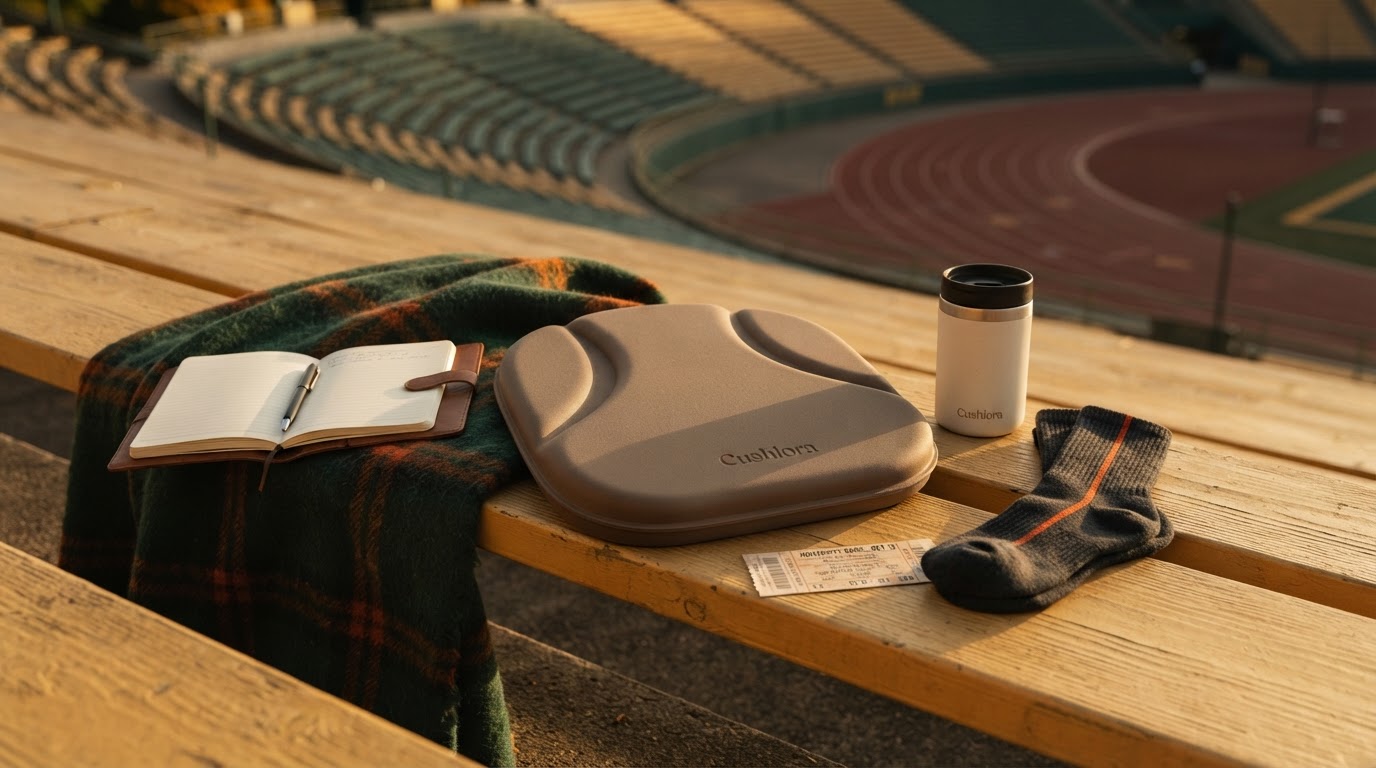
Cushlora Portable Pads for Stadium Comfort
 Sam VasquezBuying Guide Lead
August 21, 2026. This guide examines how to select a portable seat pad that provides reliable support during long sporting events. It is written for frequent attendees of high school, collegiate, and professional sports who are looking to mitigate the physical strain of sitting on rigid bleachers.
The Physical Toll of Bleacher Seating
Sitting on a standard aluminum or wood bleacher for three hours is an exercise in endurance. Most stadium seating is designed for durability and capacity rather than human ergonomics, leading to lower back fatigue and circulation issues. According to Dick's Sporting Goods, lightweight and easy-to-carry seat pads are essential because they provide cushioning and support wherever you need it, particularly at sporting events where traditional seating is lacking. The problem isn't just the hardness of the surface; it is the lack of thermal insulation. Metal bleachers conduct heat and cold efficiently, meaning you are either sitting on a freezing rail in November or a scorching plate in August. While some fans wonder are portable seat pads allowed in stadiums, the reality is that most venues permit them as long as they don't have prohibited frames or excessive pockets. Without a dedicated barrier, the repetitive vibration of a cheering crowd and the static pressure of your own weight against a flat surface can lead to significant discomfort by the second half of the game. If you're on a budget, you might be tempted to just fold up a thick blanket, but blankets lack the closed-cell foam density required to stop your sit-bones from hitting the metal. WeatherTech notes that a quality portable cushion is ideal for sports games and even for kneeling while gardening, highlighting that the utility of these pads extends beyond the bleachers. However, for the specific rigors of a stadium environment, you need something that won't compress to nothing after twenty minutes.
Performance Features of the Cushlora Series
Photo by Lisa from Pexels on Pexels
When evaluating the Cushlora Portable Series, the focus is on density and portability. Unlike generic open-cell foam pads that act like sponges, the Cushlora design utilizes materials that resist permanent compression. This is a critical distinction when you look at the Cushlora portable series vs standard bleacher seats. Standard seating offers zero shock absorption, whereas the Cushlora series acts as a mechanical buffer. Between these two—a bare bleacher and a Cushlora pad—I'd go with the pad every time, specifically for the moisture resistance. As noted by eBay listings for similar stadium foam, water-resistant foam is perfect for stadium events because it prevents the cushion from soaking up spilled beverages or rain. The Cushlora Portable Series is built to be tossed into a bag or carried via a handle without adding significant weight to your gear. It solves the primary complaint of stadium-goers: the "numbness" that sets in during the fourth quarter. Because the pad is designed for the dimensions of standard stadium rows, it doesn't overhang into the space of the person sitting behind you, which is a common point of friction in crowded sections. If you're looking for a permanent fix for your season tickets, this is the most logical step up from the basic foam slabs sold at souvenir stands. Skip this if you already have a premium stadium chair with a high backrest and armrests, as those offer a different level of support, though they are often much heavier and harder to transport through security gates. For most people, the balance of weight to comfort in the Cushlora line hits the sweet spot for a two-to-three-hour window of sitting.
Selecting the Right Portable Pad
Choosing a seat pad requires looking at three main factors: foam density, cover durability, and carry style. You want a pad that is thick enough to provide a lift but thin enough to remain portable. When you compare the Cushlora portable series vs standard bleacher seats, the ergonomic benefits become clear, but you must still ensure the pad fits your specific needs. Before buying, check if the pad has a non-slip bottom, as stadium bleachers can be slippery when wet. Also, verify the dimensions against the stadium's rules; you can find more on this in our analysis of are portable seat pads allowed in stadiums. Here's what I'd actually buy: a pad with a minimum of 1.5 inches of high-density foam and a water-resistant outer shell. This ensures that even if the bleachers are damp, you stay dry.
Use this checklist to evaluate your options:
- Check for a built-in handle or carabiner clip for hands-free transport.
- Ensure the foam is closed-cell to prevent water absorption.
- Verify the width is between 14 and 18 inches to fit standard bleachers.
- Look for a removable cover that can be machine washed after a season of use.
- Confirm the weight is under 2 lbs to avoid fatigue while walking from the parking lot.
Sources

Photo by Juan Tapias on Pexels
- Portable Seat Pads
- Seat Cushion - Portable cushion for stadiums, outdoors and ...
- Portable Stadium Seat Cushion Water Resistant Foam ...