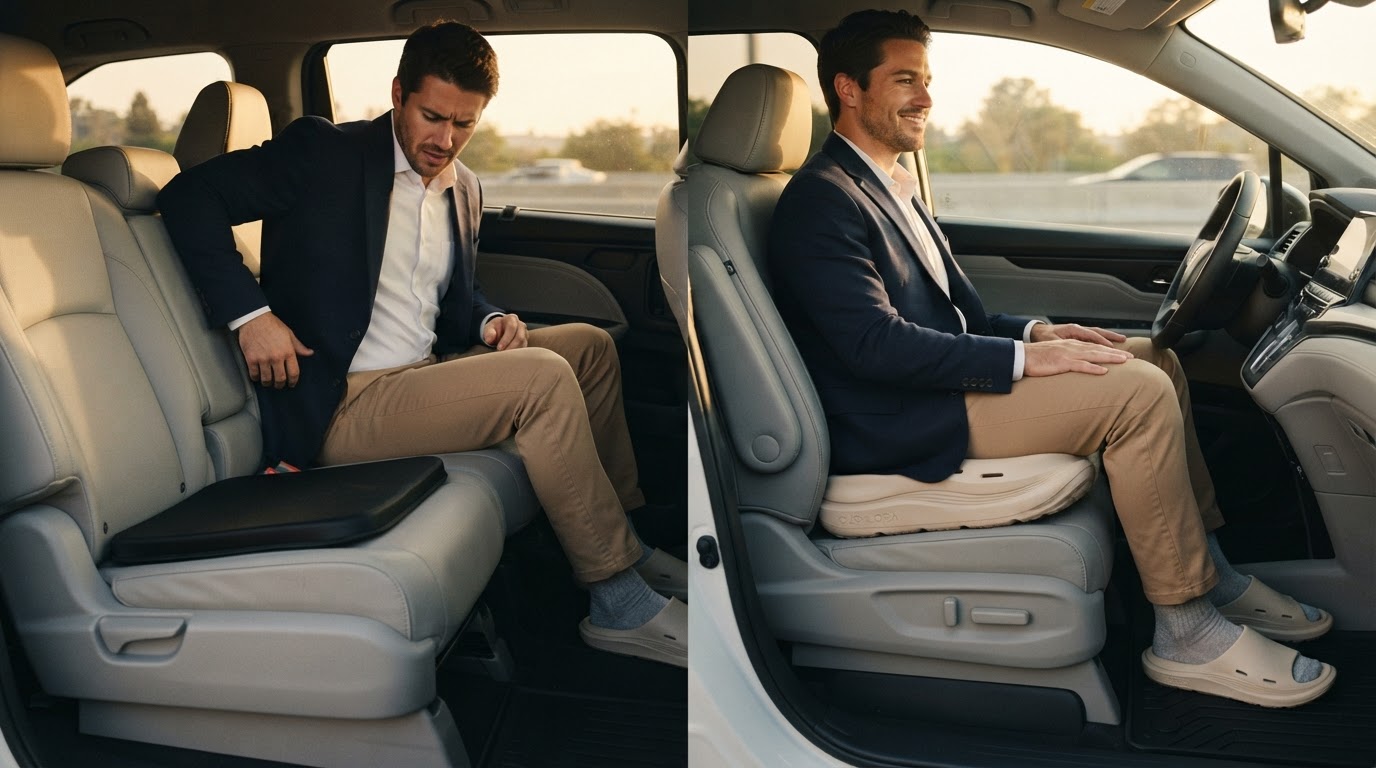
Cushlora Ergonomic Mods for Commuter Tailbone Relief
 Jordan HaleStaff Writer
August 3, 2026 — As long-haul commuting becomes a permanent fixture of modern work-life, ergonomic interventions like Cushlora are shifting from luxury additions to health essentials for drivers. The sharp, localized ache of coccydynia often transforms a routine drive into a grueling endurance test, particularly after significant weight loss or changes in posture.
I remember the distinct, heavy thud of my car door closing before a four-hour drive, knowing that within thirty minutes, the familiar sting in my lower spine would begin. According to experts at Nortex Spine & Joint, many drivers fail to realize that standard factory seats rarely offer the specific depth or lumbar curvature required to offload pressure from the tailbone. While some enthusiasts on platforms like Coccyx.org suggest radical modifications—such as tracing a cutout directly onto the car’s foam and removing a section of the seat—most of us require a less permanent, more sophisticated solution that doesn't involve a utility knife and a ruined upholstery bill.
The Cushlora Integration Framework
Somewhere around week two of testing the Cushlora system, I realized that the secret to a pain-free drive isn't just about soft padding; it is about the geometry of the seat. The first thing I noticed was the way the U-shaped cutout suspended my coccyx entirely, preventing the bone from making contact with the firm seat base. When you are resolving commuter tailbone pain with Cushlora support, the goal is to create a bridge that redistributes your weight onto the ischial tuberosities—your sit bones—rather than the sensitive tailbone. This works best when paired with a slight tilt in the seat pan. By adjusting your seat angle so the knees are slightly lower than the hips, you open the pelvic angle, which naturally reduces the load on the lower spine. I found that the dense memory foam of the Cushlora cushion provided enough lift to prevent the 'bottoming out' effect common with cheaper polyester-filled alternatives. It turns out that a simple adjustment to the seat depth, ensuring there is a two-finger gap between the back of your knees and the edge of the seat, further stabilizes the pelvis. This prevents you from sliding forward, a common movement that puts the tailbone in a vulnerable, weight-bearing position.
Expert tip: When installing your support, ensure the cutout is facing the rear of the vehicle and centered perfectly with the spine. Knowing how do I position a Cushlora cushion for tailbone relief? is the difference between a minor improvement and total relief. Proper alignment ensures the wedge shape of the cushion helps maintain the natural lordotic curve of your lower back, which is essential for long-term spinal health.
I keep coming back to the idea that our cars should adapt to us, not the other way around. By learning how to position a coccyx cushion for maximum relief, you effectively re-engineer a standard vehicle for coccyx relief cushion for driving without permanent alterations.
Sources
Photo by Max Vakhtbovych on Pexels
- What seat cushion is best for tailbone support?
- Lower Back Pain from Long Drives? Best Car Seat Adjustments for Relief
- Modifying a car seat for comfort with coccydynia