Applying the Cushlora Methodology to Wheelchair Pressure
 Priya RamanSenior Analyst
July 23, 2026. This analysis examines the technical requirements for effective load distribution in mobile seating environments. It serves as a resource for long-term wheelchair users and caregivers seeking to optimize seated health through specialized equipment.
To evaluate the efficacy of a seating surface, think of it as a matrix of immersion and stability. Two axes matter here: the ability of the material to contour to the user’s anatomy (immersion) and the capacity of the base to maintain pelvic alignment (stability). When these variables are misaligned, the risk of tissue deformation increases. According to ProHeal Products, wheelchair cushions with pressure redistribution properties are essential for alleviating pressure on vulnerable areas and reducing the risk of developing painful sores. In clinical settings, the goal is to maximize the surface area in contact with the cushion to lower the force exerted on any single point, particularly the ischial tuberosities. This is why a standard pressure relief seat pad for wheelchair must do more than provide a soft layer; it must actively manage the microclimate between the skin and the seat. Without proper ventilation and moisture control, even the most expensive foam can fail as skin maceration sets in. High-end systems often employ gel or air-cell technology to address these specific physiological needs. As noted by Living Spinal, the selection between gel, memory foam, and air cushions is a critical step in ensuring long-term comfort and safety for those with limited mobility. Finding the right pressure relief seat pad for wheelchair requires balancing these material properties against the user's specific risk profile.
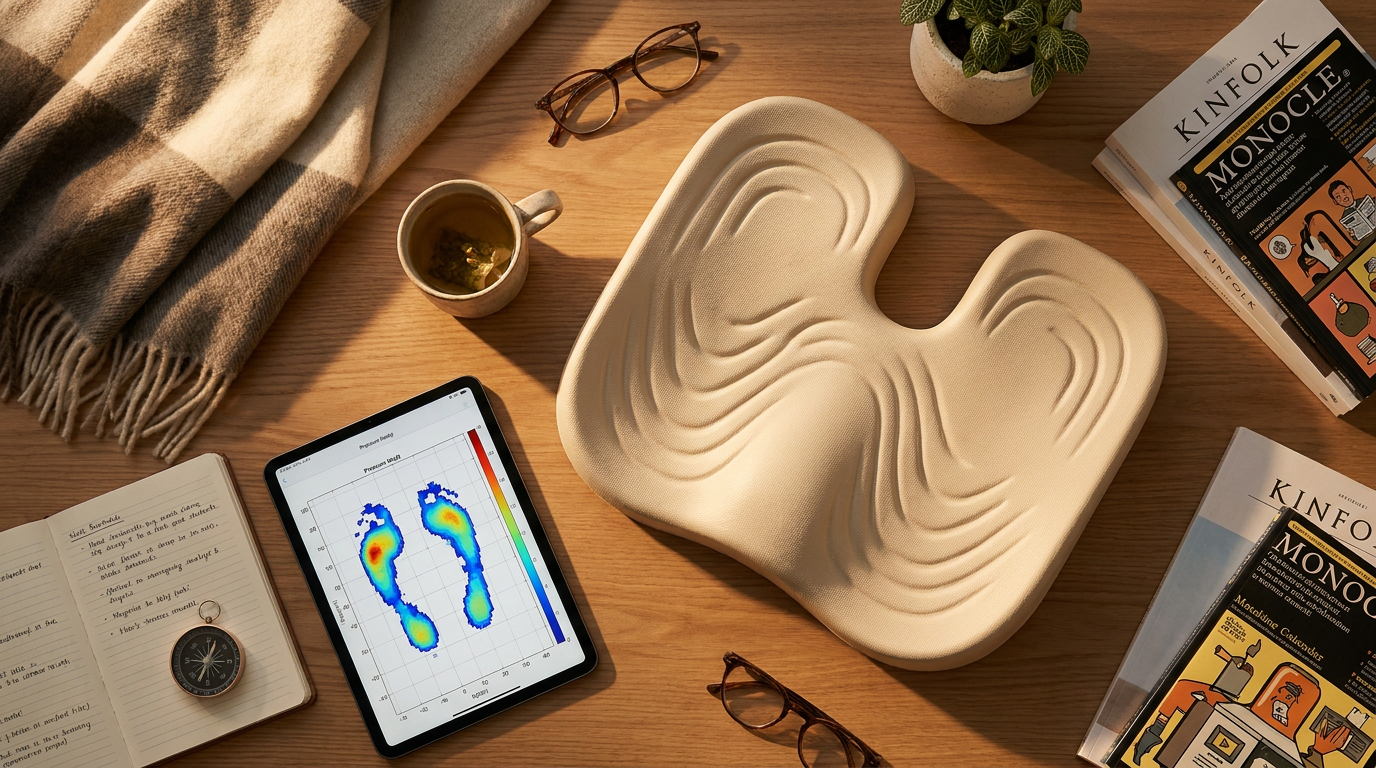
Cushlora addresses these mechanical challenges through a focus on high-density architectural foam and ergonomic contouring. The design philosophy centers on the "neutral pelvic tilt," a position that minimizes strain on the lower lumbar region while ensuring weight is distributed evenly across the thighs and buttocks. By utilizing materials that respond to body heat and weight, the pressure relief seat pad for wheelchair adapts to the user’s unique shape without bottoming out. This structural integrity is vital for individuals who spend more than six hours a day in a seated position. The Cushlora approach integrates a non-slip base with a breathable outer mesh, addressing the stability-immersion matrix simultaneously. While many retail cushions prioritize immediate softness, the Cushlora framework emphasizes long-term resilience. This prevents the "hammocking" effect where a cushion loses its shape and actually increases pressure on the hip bones. By maintaining a consistent height and density, the pressure relief seat pad for wheelchair ensures that the user's center of gravity remains stable, reducing the muscular effort required to stay upright. This systemic approach to comfort is further detailed in our research on the pressure relief seat pad for wheelchair, which highlights the importance of multi-layer construction in medical-grade seating solutions.
Selecting the appropriate seating intervention requires a structured decision rule: if the user has a history of skin breakdown, prioritize fluid or air-cell immersion; if the user requires postural correction, prioritize contoured foam stability. Once you see it this way, the choice becomes a matter of matching clinical needs to material physics. Use the following framework for final evaluation:
- Total Surface Contact: Does the pad contour to the specific shape of the user’s pelvic structure?
- Shear Reduction: Is the outer cover material slick enough to prevent skin friction during transfers?
- Thermal Regulation: Does the internal core allow for airflow to prevent heat buildup?
- Weight Capacity: Is the density rated for the user’s specific weight to prevent bottoming out?
- Maintenance: Is the cover removable and antimicrobial for long-term hygiene?
Effective pressure management is a cornerstone of mobility health. Choosing a solution backed by ergonomic principles ensures both immediate relief and long-term protection. Shop Cushlora here.
Sources

Photo by Max Vakhtbovych on Pexels
- Smart Cushion for sitting pain | 1yr Warranty | 30-Day Trial
- Wheelchair Cushions and Pads for Pressure Relief
- Wheelchair Cushions for Optimal Support