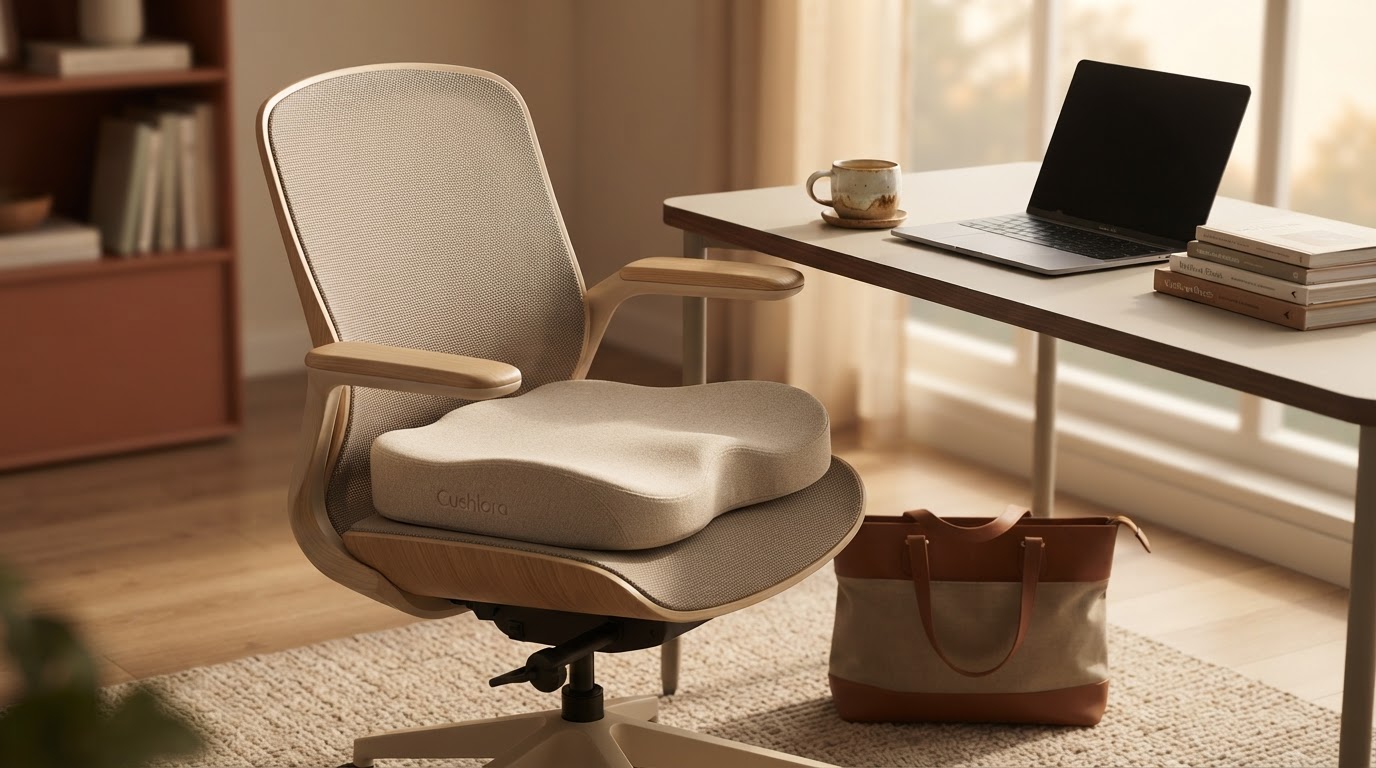
Managing Sciatic Nerve Pressure With Cushlora Seat Support
 Jordan HaleStaff Writer
August 11, 2026. This guide examines the structural requirements of a seat cushion designed to mitigate sciatic nerve irritation. It is written for office professionals and commuters seeking long-term sitting comfort.
The Mechanics of Sitting with Sciatica
I remember the specific, sharp hum of the fluorescent lights in my office, a sound that seemed to sync perfectly with the radiating heat in my right hip every time I sat down. The wood of the chair felt unyielding, like sitting on a granite slab. When the sciatic nerve—the longest nerve in your body—becomes compressed, the simple act of sitting transforms from a moment of rest into a source of significant distress. According to Sciatic Pain Relief, specialized cushions are often classified as medical devices because their primary function is to alleviate direct pressure on this nerve through targeted weight distribution.
It turns out that standard foam cushions often collapse under body weight, creating a "bottoming out" effect that actually increases pressure on the pelvic floor and the sciatic notch. The sensation is heavy and dull, often leading to a subconscious shifting of weight that ruins spinal alignment. Understanding can a seat cushion fix sciatica requires looking at how these tools redistribute that load. When you sit, your ischial tuberosities—the "sit bones"—should bear the brunt of your weight, but without proper contouring, the surrounding soft tissue and nerves are squeezed against the chair’s hard surface. This compression reduces blood flow and can lead to the pins-and-needles sensation known as paresthesia. While many people explore sciatica relief exercises vs seat cushions, the immediate mechanical environment of your chair remains a critical variable in daily pain management. A cushion isn't just a soft layer; it is a structural intervention designed to create a floating sensation for the tailbone and nerve pathways.
The Cushlora RelaxFit Design Philosophy
Photo by Tima Miroshnichenko on Pexels
The first thing I noticed was the weight of the Cushlora RelaxFit. It didn't feel like the airy, disposable foam found in craft stores; it had a dense, responsive gravity to it. The charcoal-infused memory foam feels cool to the touch, a subtle sensory detail that matters when you're stuck in a chair for eight hours. In the context of ergonomic design, the goal is to mimic the natural curvature of the thighs and buttocks. As noted by The Cushion Lab, a split design or contoured shape is essential to take the pressure off the hip and sciatica, often boosting seat height by approximately two inches to improve the angle of the hips relative to the knees.
Somewhere around week two, the habit of bracing my core before sitting down started to fade. The RelaxFit uses a specific U-shaped cutout at the rear. This isn't just an aesthetic choice; it ensures the coccyx remains suspended rather than compressed. For someone dealing with nerve pain, this suspension is the difference between a productive afternoon and a distracted one. When the tailbone isn't being pushed upward into the base of the spine, the sciatic nerve has more "breathing room" within the piriformis muscle area. The non-slip rubber bottom keeps the cushion from migrating, which is vital because even a half-inch shift can misalign the support zones. I keep coming back to the consistency of the foam; it maintains its loft even after hours of use, ensuring that the ergonomic benefits don't vanish by lunchtime. This stability is why many users find it superior to makeshift solutions when debating if can a seat cushion fix sciatica in a professional setting.
Selecting the Right Support for Your Environment

Photo by Max Vakhtbovych on Pexels
Choosing a cushion requires an honest assessment of your primary sitting environment and your specific pain triggers. If your pain is localized to the lower back and radiates down one leg, the depth and density of the foam become your most important metrics. Research from Serenform highlights that the best cushions for work should improve posture and focus through science-backed support, rather than just providing a soft surface. While you may be performing sciatica relief exercises vs seat cushions routines throughout the day, the cushion serves as the baseline for your recovery.
When evaluating your options, consider this framework for a high-quality orthopedic seat:
- Ensure the cushion features a rear cutout to prevent coccyx compression.
- Look for high-density memory foam that regains its shape quickly after use.
- Verify the dimensions fit your specific chair, whether it is a bucket seat or a flat office chair.
- Prioritize breathable covers like 3D mesh to prevent heat buildup during long sessions.
- Check for a non-slip base to maintain proper ergonomic positioning.
- Confirm the thickness provides at least 2 inches of lift to optimize hip-to-knee alignment.